
Chromosomal Mutation: Types, Causes, and Effects on Organisms
Introduction to Chromosomal Mutation
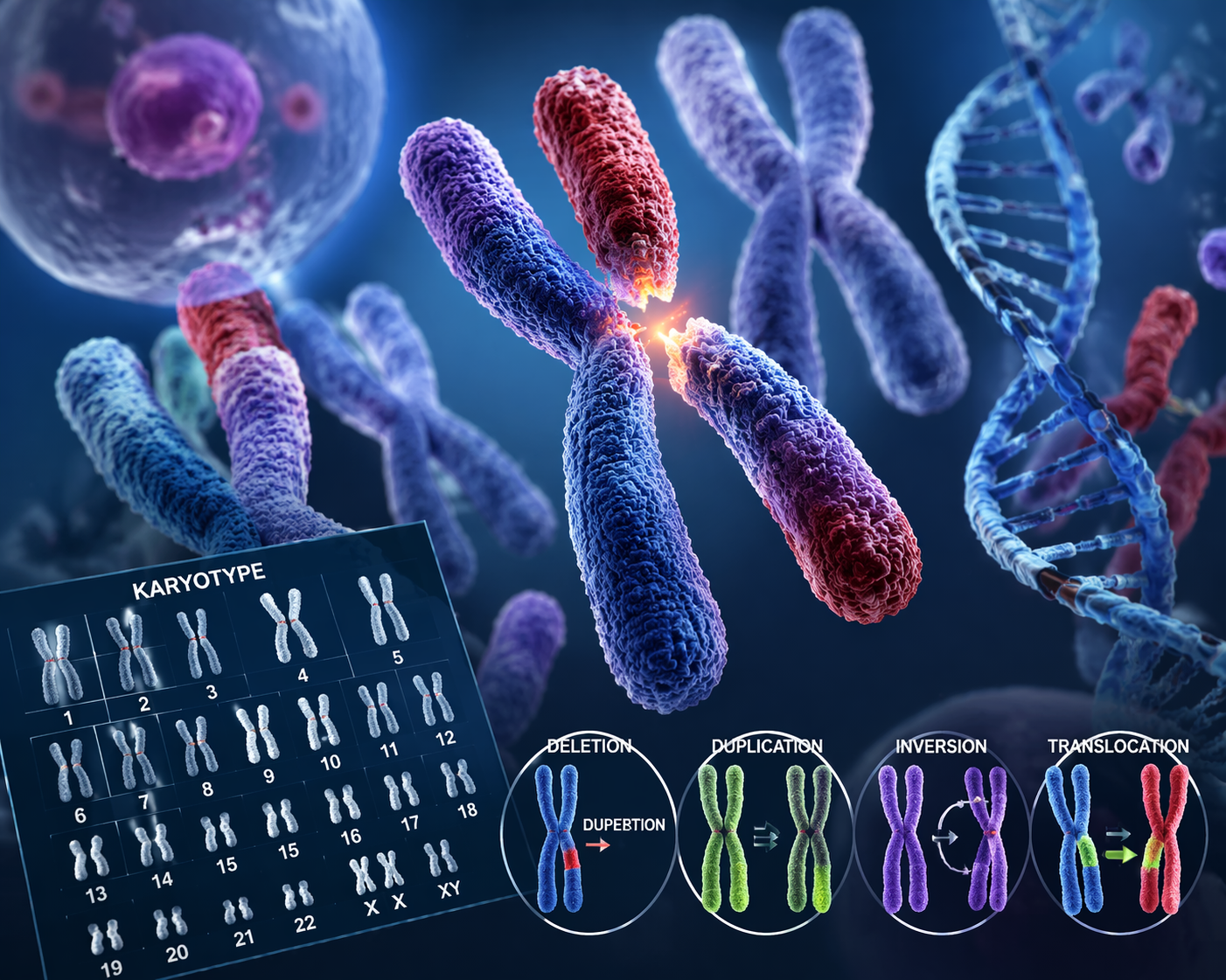
A chromosomal mutation refers to any change in the structure or number of chromosomes in an organism. Unlike gene mutations that affect a single gene, chromosomal mutations can impact large segments of DNA, sometimes altering multiple genes at once.
These mutations play a crucial role in evolution, genetic diversity, and, in some cases, diseases.
What is a Chromosomal Mutation?
A chromosomal mutation occurs when the normal structure or number of chromosomes is altered. These changes can be structural (involving parts of a chromosome) or numerical (affecting the total chromosome count).
Chromosomal mutations may arise spontaneously during DNA replication or be induced by external factors such as chemicals, radiation, or viral infections.
Types of Chromosomal Mutation
The chromosomal mutation can be classified into two main categories: structural mutations and numerical mutations.
1. Structural Chromosomal Mutations
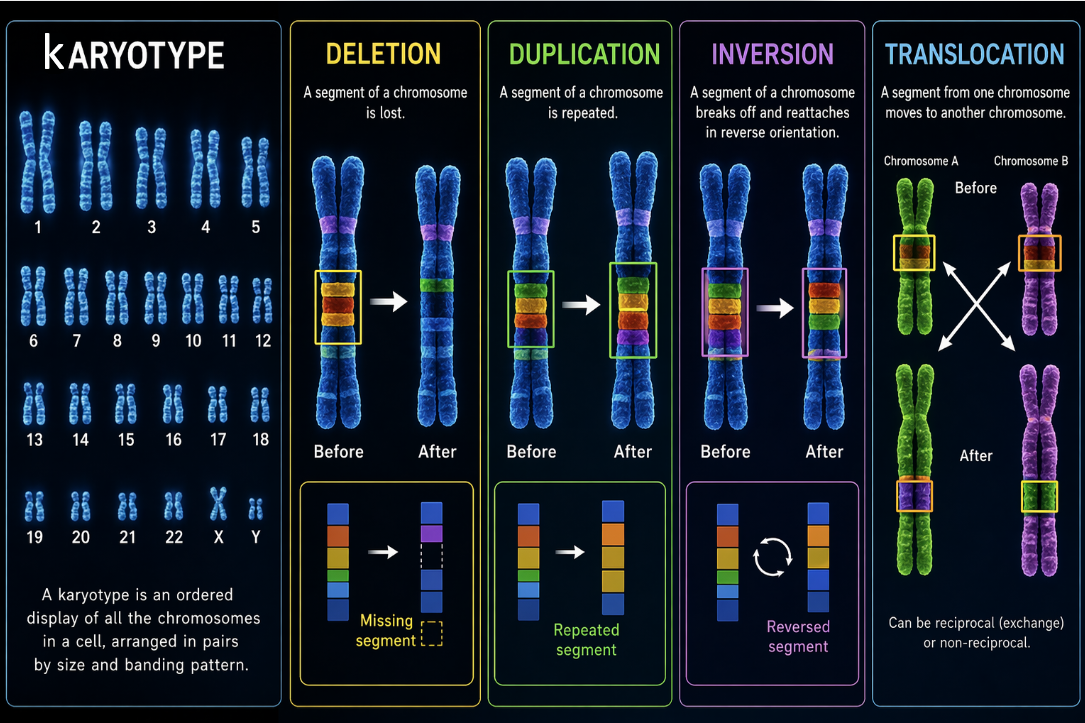
Structural mutations involve changes in the physical structure of a chromosome. The main types include:
a) Deletion
- A segment of a chromosome is lost
- Can remove essential genes, causing genetic disorders
b) Duplication
- A segment of a chromosome is repeated
- Leads to extra copies of certain genes
c) Inversion
- A chromosome segment breaks off and reattaches in reverse
- May disrupt gene function
d) Translocation
- A segment of one chromosome moves to another chromosome
- Can be reciprocal (exchange between two chromosomes) or non-reciprocal
- Often linked to cancers
2. Numerical Chromosomal Mutations
Numerical mutations involve changes in the total number of chromosomes:
a) Aneuploidy
- Extra or missing chromosomes
- Example: Down syndrome (trisomy 21)
b) Polyploidy
- Entire sets of chromosomes are added
- Common in plants, less frequent in animals
Causes of Chromosomal Mutation
Chromosomal mutations can be caused by:
- Errors during meiosis or mitosis
- Radiation (UV, X-rays)
- Chemical mutagens (benzene, colchicine)
- Viruses (that integrate into the genome)
- Inherited mutations from parents
Effects of Chromosomal Mutation
The impact of a chromosomal mutation depends on the type and location:
- Genetic disorders (e.g., Down syndrome, Turner syndrome)
- Infertility or miscarriage
- Cancer development (e.g., chronic myeloid leukemia caused by translocation)
- Evolutionary adaptations in species
Detection of Chromosomal Mutations
Chromosomal mutations can be detected using cytogenetic and molecular techniques:
- Karyotyping – Visualizing chromosomes under a microscope
- Fluorescence in situ hybridization (FISH) – Locating specific DNA sequences
- Comparative Genomic Hybridization (CGH) – Detecting duplications or deletions
Chromosomal Mutation vs Gene Mutation
| Feature | Chromosomal Mutation | Gene Mutation |
|---|---|---|
| Scope | Affects large DNA segments or whole chromosomes | Affects single genes or nucleotides |
| Effect | Can impact multiple genes | Usually impacts one gene |
| Examples | Down syndrome, translocation in leukemia | Sickle cell anemia, cystic fibrosis |
| Detection | Karyotype, FISH, CGH | PCR, DNA sequencing |
Conclusion
A chromosomal mutation is a powerful factor in genetics, influencing evolution, disease, and biodiversity. Understanding these mutations helps scientists in genetic counseling, medical diagnosis, and research.
Studying chromosomal mutation is essential for advancing medicine and biotechnology, as it provides insight into how organisms adapt and how genetic disorders arise.