
The Human Microbiome
MICROBIOLOGY • HUMAN HEALTH • SCIENTIFIC RESEARCH
The Human Microbiome: Understanding the Invisible Ecosystem Inside and Around Us
Explore the microorganisms that inhabit the human body, their biological functions, their relationship with health, and the laboratory technologies advancing microbiome research.
What Is the Human Microbiome?
The human microbiome refers to the complex collection of microorganisms, their genetic material, and their biological activities associated with the human body. These microbial communities include bacteria, archaea, fungi, viruses, and other microscopic organisms.
They inhabit different body environments, including the gastrointestinal tract, skin, oral cavity, respiratory tract, and urogenital system. Each location provides unique environmental conditions that influence which microorganisms can survive and interact.
One important distinction in microbiology is the difference between the terms microbiota and microbiome. Microbiota describes the microorganisms present in a particular environment, whereas microbiome generally encompasses the microorganisms and their collective genetic and functional potential.
The Human Microbiome Project demonstrated that microbial communities differ considerably between body sites and between healthy individuals. Microbial diversity is therefore an important research topic rather than a single universal measure of health.
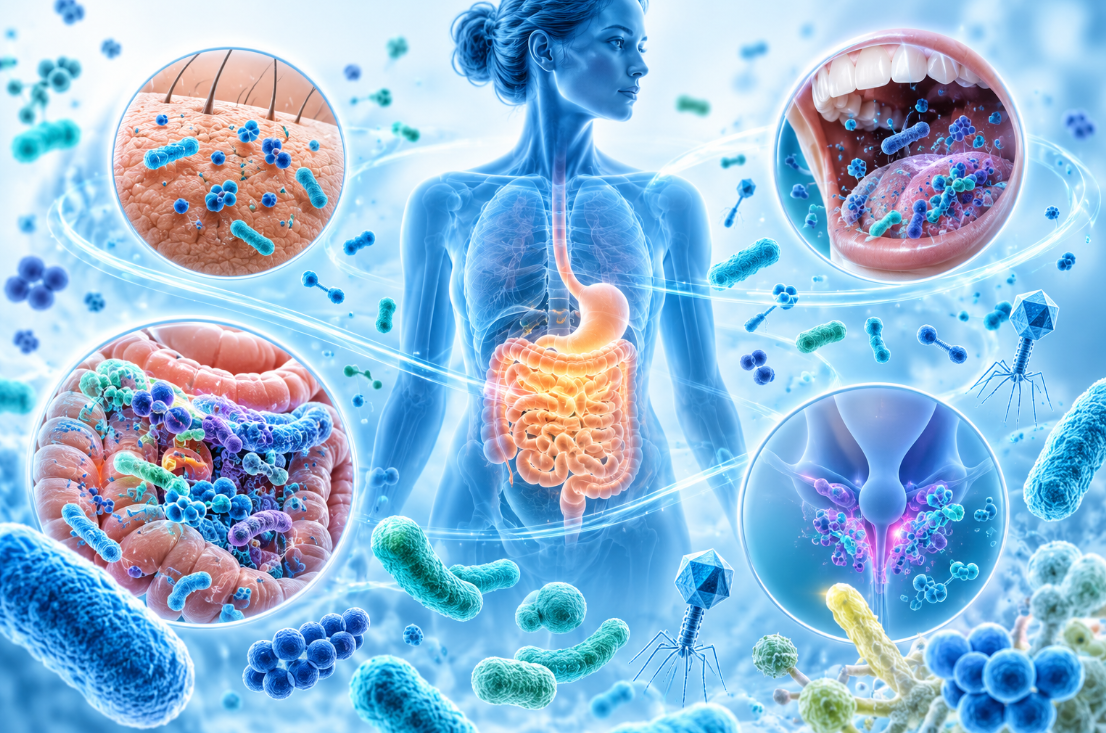
Scientific illustration: microbial ecosystems throughout the human body.
Where Are Microorganisms Found in the Human Body?
Microbial communities are distributed across multiple anatomical locations. Their composition depends on environmental conditions, nutrient availability, host biology, and interactions between microorganisms.
1. Gut Microbiome
The gastrointestinal tract, particularly the colon, contains a highly diverse microbial ecosystem. Gut microorganisms participate in the fermentation of dietary components, the production of metabolites such as short-chain fatty acids, and interactions with the intestinal immune system.
2. Skin Microbiome
The skin supports microbial communities that vary according to moisture, temperature, sebum production, and anatomical location. These microorganisms interact with the skin barrier and local immune environment.
3. Oral Microbiome
The oral cavity contains diverse microorganisms that colonize surfaces such as the tongue, teeth, and oral mucosa. Their composition is influenced by saliva, diet, oral hygiene, and interactions between microbial species.
4. Urogenital Microbiome
The urogenital tract contains specialized microbial communities. Their composition differs between anatomical sites and individuals and can be influenced by hormonal, environmental, and physiological factors.
Major Functions of the Human Microbiome
Microorganisms are not simply passive inhabitants of the human body. They participate in several biological processes through their interactions with host cells and other microorganisms.
1. Nutrient Metabolism
Gut microorganisms help break down dietary components that human digestive enzymes cannot fully digest. Fermentation of certain dietary fibers produces short-chain fatty acids, including acetate, propionate, and butyrate.
2. Immune System Interactions
Microbial communities interact with the intestinal barrier and immune cells. These interactions contribute to immune development, immune regulation, and the maintenance of tissue homeostasis.
3. Protection Against Pathogens
Resident microorganisms can help limit pathogen colonization through competition for nutrients and attachment sites, as well as the production of antimicrobial substances.
4. Metabolite Production
Microbial metabolism produces numerous molecules that can interact with human physiological pathways. Examples include short-chain fatty acids and metabolites derived from dietary compounds and bile acids.
5. Gut-Brain Communication
The gut microbiome is being investigated for its interactions with the nervous system through neural, endocrine, metabolic, and immune pathways. The mechanisms and clinical significance of these interactions remain active areas of research.
What Influences Microbiome Diversity?
The composition of microbial communities is dynamic. Several factors can influence microbial diversity and function:
- Diet: Dietary fiber, plant diversity, fermented foods, and overall nutritional patterns can influence microbial composition and metabolism.
- Age: Microbial communities change throughout life, from early development to adulthood and older age.
- Medication: Antibiotics and other medications can alter microbial communities.
- Environment: Geography, sanitation, lifestyle, and environmental microbial exposure can contribute to microbial variation.
- Host factors: Genetics, immune function, physiology, and underlying health conditions can influence microbiome composition.
Importantly, there is no single microbial composition that defines optimal health for every individual. Researchers increasingly consider microbial functions, resilience, and individual variability when interpreting microbiome data.
How Is the Human Microbiome Studied in the Laboratory?
Modern microbiome research combines molecular biology, microbiology, genetics, bioinformatics, and analytical chemistry to investigate microbial communities.
16S rRNA Gene Sequencing
16S ribosomal RNA gene sequencing is widely used to characterize bacterial and archaeal communities. It targets conserved and variable regions of the 16S rRNA gene to help identify microorganisms and compare community composition.
Shotgun Metagenomic Sequencing
Shotgun metagenomics analyzes DNA recovered from a microbial community. Unlike targeted 16S sequencing, it can provide information about bacteria, archaea, fungi, viruses, and microbial genes, depending on the sample and sequencing approach.
Microbial DNA Extraction
DNA extraction is a critical step in microbiome analysis. Efficient cell disruption, DNA purification, and contamination control are essential for generating reliable molecular data.
Metabolomics
Metabolomics investigates small molecules produced or modified by microorganisms and their host. It helps researchers understand the functional consequences of microbial activity.
Bioinformatics and Data Analysis
Bioinformatics tools are used to process sequencing data, classify microorganisms, compare microbial communities, investigate diversity, and identify potential associations between microbial profiles and biological conditions.
Sample collection, storage, extraction methods, sequencing depth, negative controls, and contamination monitoring can all affect microbiome research results.
Applications of Microbiome Research
Research into human-associated microbial communities is expanding across several scientific disciplines.
- Gastrointestinal research: Investigating microbial communities and their relationship with digestive physiology.
- Immunology: Understanding interactions between microorganisms, immune cells, and host defense mechanisms.
- Nutrition science: Studying how dietary patterns influence microbial metabolism.
- Infectious disease research: Investigating microbial competition and pathogen colonization.
- Personalized medicine: Exploring how individual microbiome characteristics may influence responses to treatments.
- Biotechnology: Developing microbiome-based research approaches, microbial products, and potential therapeutic strategies.
Conclusion: Why Is the Human Microbiome Important?
The human microbiome is a complex biological ecosystem that contributes to many aspects of human physiology. From nutrient metabolism and immune interactions to microbial ecology and host communication, these microorganisms represent an important area of modern biomedical research.
Advances in DNA sequencing, microbial analysis, metabolomics, and bioinformatics continue to improve our understanding of microbial diversity and function. As research progresses, microbiome science may provide new insights into human biology, disease mechanisms, and future therapeutic strategies.
Frequently Asked Questions About the Human Microbiome
What is the human microbiome in simple terms?
It is the collection of microorganisms, their genetic material, and their activities associated with the human body.
What is the difference between microbiota and microbiome?
Microbiota refers to the microorganisms in a particular environment, while microbiome generally includes the microorganisms and their genetic and functional potential.
Why is the gut microbiome important?
It contributes to dietary fiber fermentation, metabolite production, intestinal barrier interactions, and immune system regulation.
How do scientists analyze the microbiome?
Researchers use techniques such as 16S rRNA gene sequencing, shotgun metagenomics, microbial DNA extraction, metabolomics, and bioinformatics.
Does everyone have the same microbiome?
No. Microbial communities vary between individuals, body sites, environments, and stages of life.
Scientific References
Selected peer-reviewed publications supporting this article:
- Human Microbiome Project Consortium. (2012). Structure, function and diversity of the healthy human microbiome. Nature, 486, 207–214. https://doi.org/10.1038/nature11234
- Lozupone, C. A., et al. (2012). Diversity, stability and resilience of the human gut microbiota. Nature, 489, 220–230. https://doi.org/10.1038/nature11550
- Cho, I., & Blaser, M. J. (2012). The human microbiome: at the interface of health and disease. Nature Reviews Genetics, 13, 260–270. https://doi.org/10.1038/nrg3182
- Van Hul, M., et al. (2024). What defines a healthy gut microbiome? Gut, 73(11), 1893–1908. https://doi.org/10.1136/gutjnl-2024-333378
- Joos, R., et al. (2025). Examining the healthy human microbiome concept. Nature Reviews Microbiology, 23, 192–205. https://doi.org/10.1038/s41579-024-01107-0
- Ross, F. C., et al. (2024). The interplay between diet and the gut microbiome: implications for health and disease. Nature Reviews Microbiology, 22, 671–686. https://doi.org/10.1038/s41579-024-01068-4
This article is intended for scientific and educational purposes and does not replace professional medical advice.
Explore Scientific Research with Gentaur
Discover laboratory research products and scientific resources for microbiology, molecular biology, and biomedical research.
EXPLORE GENTAURRecent Posts
-
The Human Microbiome
MICROBIOLOGY • HUMAN HEALTH • SCIENTIFIC RESEARCH The Human Microbiome: Understanding the Invisibl …9th Nov 2026 -
Bacteriophages
MICROBIOLOGY • VIROLOGY • BIOTECHNOLOGY Bacteriophages: Infection Mechanisms and Therapeutic Appl …9th Nov 2026 -
Ni-NTA Magnetic Agarose Beads
PROTEIN PURIFICATION | MOLECULAR BIOLOGY Ni-NTA Magnetic Agarose Beads: Principle, Protocol and Ap …6th Nov 2026